
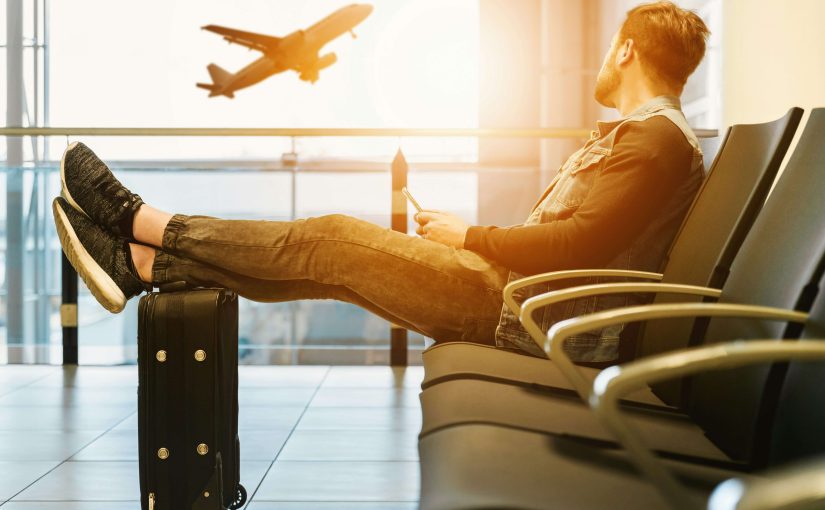
Most solo travelers recognize this moment: you’re about to leave and you’re not feeling brave.
Not in the cinematic way people imagine bravery. Not the kind where your shoulders square and your mind clears and everything inside you says, “Yes, I’m ready.” More often, it’s the opposite. It’s hesitation. It’s second guessing. It’s that strange combination of excitement and grief, like you’re stepping into a life you want but aren’t fully convinced you’re allowed to live.
And what makes it even stranger is that you might already have proof you can do it.
You’ve done hard things before. You’ve handled work stress, life transitions, family expectations, financial pressure, personal loss. You’ve already navigated your own survival in a hundred invisible ways. But when it comes to walking into an airport alone, sitting down at a restaurant without a buffer, or arriving in a new place with no shared plan, confidence feels missing. Like something you’re supposed to possess before you deserve the experience.
That’s the myth: that confidence is a requirement.
For many solo travelers, confidence is the souvenir.
Why Solo Travel Asks for Trust Before it Provides Evidence
Solo travel doesn’t just introduce a new environment. It removes a particular kind of support system: the shared perception of reality.
When you travel with someone else, you borrow calm from them. You borrow certainty. Even when neither of you truly knows what you’re doing, the presence of another person creates the feeling of stability. There’s someone to confirm what the map says, someone to agree that this street feels right, someone to split the emotional load of confusion or risk.
Solo travel takes that away, and what replaces it is not automatic empowerment. It’s exposure.
You see yourself without the usual witnesses. Without the usual translation layer. You become the only interpreter of what’s happening. The only decider. The only one who can say, “This feels okay,” or “This is wrong,” or “I’m changing the plan.”
That is not a small thing. It is psychologically demanding in a way that’s hard to explain to people who haven’t done it.
Confidence often doesn’t exist beforehand because confidence is usually built from evidence. It’s built from memory. It’s built from the ability to say, “I’ve handled this before.”
And solo travel, especially early on, is a sequence of situations you have not handled before.
So instead of feeling confident, you feel alert.
Instead of feeling free, you feel responsible.
Instead of feeling excited, you feel uncomfortably aware of your own aloneness.
This is not failure. This is the process.
The First Solo Trip Rarely Feels Like the One You Imagined
In our community, there’s a kind of unspoken truth: the first solo trip is often emotionally messy.
It can be beautiful, even life changing. But it can also include quiet panic in hotel rooms, awkwardness in public spaces, and moments where your body feels like it’s on guard even when nothing is wrong. It can include loneliness that arrives without warning, not because you’re unhappy with your choice, but because your nervous system isn’t used to this kind of independence.
The first time you walk through a city alone, your mind might narrate everything. It might create worst case scenarios. It might ask if you’re making a mistake. It might tell you everyone is looking at you, even when no one is.
That’s not irrational. It’s adaptation.
Your brain is scanning for social proof. It’s scanning for safety cues. It’s scanning for belonging. And it isn’t finding them in the usual ways.
So it does what it always does when you step into unfamiliar territory: it tries to protect you with doubt.
The confidence doesn’t come before because the confidence is what remains after your brain realizes you survived the uncertainty.
Confidence is Not a Feeling. It’s a Pattern You Recognize in Yourself.
One of the most important mindset shifts in solo travel is realizing that confidence is not a personality trait.
It’s a relationship with uncertainty.
Many of us grew up believing confident people feel calm. That they know what they’re doing. That they don’t hesitate. But solo travel teaches something more honest: confidence is often simply being willing to proceed without certainty.
Even more: it’s being willing to be uncomfortable without making that discomfort mean you’re unsafe or incapable.
On solo trips, you learn that fear doesn’t automatically predict danger. It often predicts novelty.
You learn that discomfort doesn’t automatically predict failure. It often predicts growth.
You learn that being alone doesn’t automatically predict loneliness. Sometimes it predicts spaciousness. Sometimes it predicts clarity.
Sometimes it predicts relief.
And eventually, you start to recognize yourself.
Not in a motivational way, but in a grounded way.
You start to notice the pattern:
You arrive unsure.
You adapt.
You figure it out.
You become okay.
You even become good at it.
And this is how confidence is born. Not from optimism, but from repetition.
New Solo Travelers Are Not Less Capable. They’re Just Earlier in the Cycle.
In solo travel communities, experience can sometimes look like ease.
More seasoned travelers move differently. They don’t overthink every decision. They don’t narrate every interaction in their head. They’re not constantly scanning for what could go wrong. Or if they are, it doesn’t take over the entire day.
But it’s not because they were born fearless.
It’s because they have lived through enough of the cycle that their nervous system has learned: “This ends fine.”
They’ve built an internal reference library of moments that used to feel overwhelming and now feel normal. They’ve learned their own thresholds. They’ve learned what they can tolerate. They’ve learned what signals mean “pay attention” and what signals mean “you’re just uncomfortable.”
New solo travelers haven’t collected those experiences yet, which means everything can feel more intense. More loaded. More emotionally expensive.
That doesn’t mean they’re doing it wrong.
It means they’re in the part of the story where confidence hasn’t arrived yet.
What Solo Travel Really Builds is Self-Trust
Confidence is a word we use because it sounds clean.
But what solo travel actually builds is something quieter and more important: self-trust.
Self-trust is not loud. It doesn’t announce itself. It doesn’t always feel good in the moment. Self-trust often looks like:
“I’m not sure, but I’ll figure it out.”
“This feels hard, but I can handle hard.”
“I can be alone without abandoning myself.”
“I can be scared without turning back.”
“I can change my mind without shame.”
Solo travel tests this not through grand challenges, but through small decisions that nobody else can make for you.
Where do I go now?
What do I want to eat?
Do I want company, or do I want quiet?
Is this exhaustion, loneliness, or overstimulation?
Am I pushing myself in a meaningful way, or just punishing myself because I think I should be “tough”?
Each of these moments is a vote for the kind of relationship you have with yourself.
And at the beginning, that relationship might feel shaky.
Later, it becomes more stable.
Not because travel fixes you, but because travel reveals you, and then gives you the chance to respond differently.
Why the Confidence Shows Up Later, Sometimes Long After You Return
Here’s another shared truth: sometimes you don’t feel confident even while the trip is happening.
Sometimes you feel uncertain the whole time.
But then you return home and something shifts.
You’re at the grocery store, or in your daily routine, and suddenly you remember yourself navigating a foreign street alone. Solving a problem without help. Sitting with discomfort and not collapsing. Witnessing yourself being capable without anyone cheering for you.
And that memory changes you.
Not dramatically, not like a movie. But internally.
It becomes a new reference point.
It becomes evidence.
That’s why confidence comes after the trip. Because it’s constructed from hindsight. From reflection. From integrating the experience into your identity.
It’s not “I traveled alone,” but “I am someone who can travel alone.”
And that identity quietly leaks into everything else.
You become a little harder to intimidate.
A little less dependent on external reassurance.
A little more willing to try things without guaranteed success.
Not because you learned a trick, but because your life now contains proof.
The Deeper Gift: Realizing You Don’t Need to Feel Ready to Begin
Solo travel has a way of reshaping the order of things.
We’re taught that readiness comes first, and action comes second.
But solo travel flips it. You act first. You feel messy. You doubt yourself. You do it anyway. And then you become the kind of person who can.
It’s not about forcing fear away. It’s about refusing to make fear the decision-maker.
And that is what makes solo travel so profoundly personal.
Because in the end, the trip is never only about where you went.
It’s about the version of you that appeared while you were there.
The version of you that kept walking.
The version of you that didn’t need to be confident to begin.
Only willing.
Closing reflection
Maybe confidence isn’t what gets you on the plane.
Maybe it’s what quietly grows in you after you land, after you navigate the discomfort, after you return home and realize the truth:
You weren’t waiting for confidence.
Confidence was waiting for evidence.