
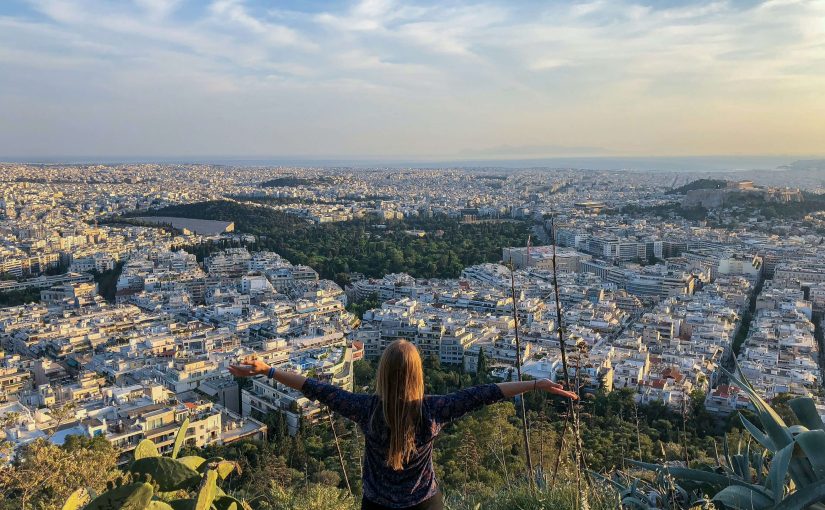
You are standing somewhere unfamiliar. The language around you is not your own. The rhythm of the street feels slightly out of sync with what your body expects. No one is waiting for you. No one is guiding you. No one is adjusting their pace to match yours.
At first, that moment can feel exposed.
Later, it begins to feel like space.
Solo travel rarely transforms us in dramatic, cinematic ways. It works more quietly than that. The shifts are subtle. They accumulate in small interactions, private decisions, and long stretches of time spent alone in motion. Over time, those experiences shape skills that are difficult to name but easy to recognize in ourselves.
The Skill of Sitting With Uncertainty
When we first travel alone, uncertainty can feel loud.
Missed trains feel heavier. Silence at a café table feels amplified. Even small decisions, like which direction to walk, can carry an unexpected weight because no one else is there to confirm them.
Over time, something changes. Not the uncertainty itself. That never disappears. But our relationship to it shifts.
We begin to realize that most situations resolve. We notice that confusion often softens into clarity with patience. We learn that discomfort rarely lasts as long as we fear it will.
This is not about becoming fearless. It is about becoming familiar with uncertainty.
Experienced solo travelers often describe a kind of quiet steadiness. It is not that they know exactly what will happen. It is that they trust themselves to respond when it does. That trust is built in small, unremarkable moments. Finding your way after taking the wrong turn. Navigating a conversation with limited vocabulary. Adjusting plans without anyone else to blame or lean on.
Each of these moments strengthens a tolerance for not knowing.
The Skill of Social Calibration
There is also a social intelligence that develops gradually.
Traveling alone sharpens our awareness of tone, body language, and context. Without a companion to absorb half of the interaction, we become more attentive. We sense when a conversation is welcome and when it is not. We notice how our presence shifts depending on environment.
New solo travelers often oscillate between overextending and withdrawing. There can be a desire to connect intensely, or a protective instinct to stay guarded. With experience, something more balanced emerges.
We learn that connection does not have to be constant to be meaningful. We grow more comfortable initiating small exchanges. We also grow more comfortable declining them.
There is a subtle confidence in knowing that you can enter a room alone and remain grounded in who you are. You are not performing for a group. You are not being mirrored by a travel companion. You are meeting people, or choosing not to, on your own terms.
This social calibration is not about becoming outgoing. It is about becoming attuned.
The Skill of Self-Observation
Solo travel also creates long stretches of unfiltered time with oneself.
There are train rides with no conversation to fill the space. There are meals where your thoughts become the only soundtrack. There are evenings when the absence of familiar voices makes your internal voice louder.
For some, this can be uncomfortable at first. It can reveal anxieties or patterns that are easier to ignore in the noise of daily life.
But over time, that solitude becomes instructive.
We start to notice our own rhythms. When we feel energized. When we feel depleted. How we react under pressure. What kinds of environments calm us. Which situations trigger defensiveness or openness.
This is not introspection in a formal sense. It is simply observation. And observation leads to recognition.
Experienced solo travelers often speak about knowing themselves more clearly. Not in a grand philosophical way, but in practical, embodied terms. They recognize when they need quiet. They recognize when they are pushing too hard. They recognize when they are capable of more than they assumed.
That recognition is a skill. It develops because there is no one else to project onto.
The Skill of Emotional Regulation
Travel has a way of amplifying emotions.
Loneliness can feel sharper. Joy can feel more intense. Frustration can surface quickly when plans unravel. Without a familiar support system nearby, emotions arrive more directly.
In the early stages of solo travel, these emotional swings can feel destabilizing. A small disappointment can seem disproportionate. A minor misunderstanding can linger.
Over time, emotional regulation becomes less reactive.
We learn that loneliness is often situational. That frustration can pass with rest. That feeling adrift one evening does not define the entire experience.
There is a quiet discipline that forms here. We begin to separate temporary states from lasting conclusions. We become less likely to interpret a single difficult moment as a verdict on the entire journey.
This skill does not eliminate emotion. It contextualizes it.
The Skill of Decision Ownership
Perhaps one of the most profound changes is how we relate to our own decisions.
When traveling with others, decisions are shared. Outcomes are distributed. When traveling alone, every choice rests more visibly with us. Where to go. When to leave. Whether to stay longer or move on.
At first, this can feel heavy. There is no one to validate a choice. No one to share responsibility if it turns out poorly.
But that same dynamic creates clarity.
We begin to see patterns in our decisions. We recognize when we rush. We recognize when we hesitate unnecessarily. We start to understand our own risk tolerance, not in theory but in lived practice.
Over time, decision ownership builds a deeper form of confidence. Not the loud kind. The steady kind.
It is the confidence that comes from having chosen, adjusted, recovered, and continued.
Different Stages, Different Lessons
New solo travelers often focus on proving something to themselves. There can be an unspoken question beneath the surface. Can I do this? Am I capable?
Experienced solo travelers tend to shift toward a different question. What does this season of travel require from me? What pace feels aligned now?
The skills continue to evolve. The early stage builds resilience. The middle stage builds discernment. Later stages often build refinement.
The common thread is not boldness. It is self-trust.
And self-trust is rarely built through dramatic victories. It is built through repetition. Through navigating ordinary days in unfamiliar places. Through experiencing doubt and moving anyway. Through choosing solitude and discovering that it does not diminish you.
What Solo Travel Reveals
Over time, solo travel begins to reveal something simple.
Independence is not isolation. Confidence is not certainty. Self-trust is not the absence of fear.
It is the willingness to stay present when no one else is steering.
Many of us can trace a quiet line through our journeys. We become less reactive. Less dependent on external validation. Less shaken by temporary discomfort.
We do not necessarily become braver in obvious ways. But we become steadier.
And perhaps that is the most subtle skill of all.
When you think about your own travels, you may notice these shifts only in hindsight. The first time you navigated a new city alone. The first time you chose to sit with loneliness instead of outrunning it. The first time you realized that you no longer needed reassurance.
The changes are rarely dramatic. They are cumulative.
And in that accumulation, something enduring takes shape.